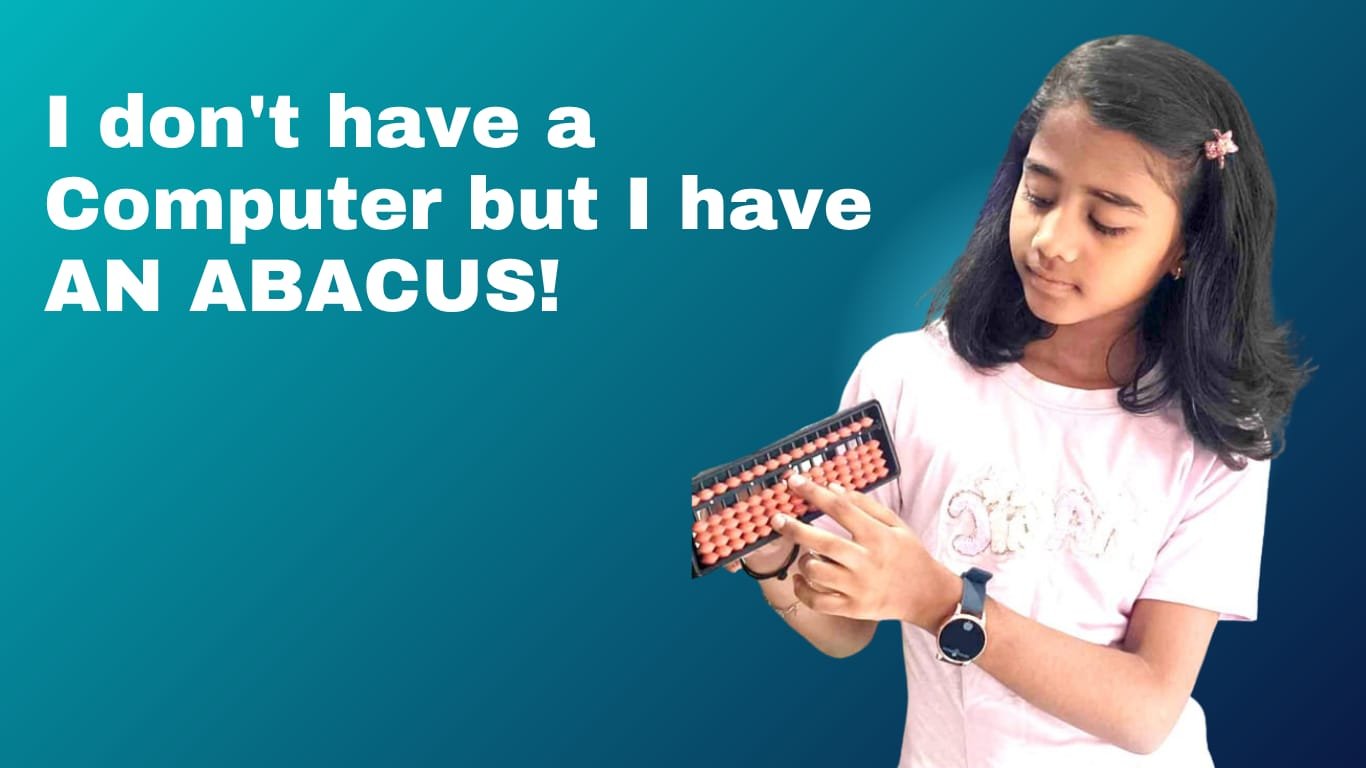
Our live and offline Abacus programs help children think clearly, compute quickly, and build lasting confidence. Learn from expert mentors through structured levels and engaging practice.
Small batches, real-time feedback, and playful drills keep learners engaged while mastering core techniques.
Safe, engaging classrooms with certified instructors and group learning energy.
Join our online classes with the same quality instruction from the comfort of your home.
Explore Online ClassesA budget-friendly program designed for your school β introduce abacus as a regular subject so all students benefit.
Both follow the same structured curriculum with practice worksheets and periodic assessments.
Mission, vision, and core strengths
To make quality abacus education accessible to every child, helping them unlock their full potential and develop essential life skills through mental arithmetic.
To be the leading abacus education provider, recognized for nurturing confident, creative, and mathematically proficient individuals who excel in all areas of life.
The abacus is one of the oldest calculating tools in the world. It uses beads and rods to represent numbers and operations, helping children develop a deep, visual understanding of arithmetic.
Modern Abacus training focuses on both hands working together, stimulating both hemispheres of the brain. With consistent practice, children learn to visualize the abacus mentally, performing complex calculations without any physical device.
The abacus has been used for thousands of years across civilizations such as the Chinese, Romans, and Japanese. It began as a simple counting frame and evolved into a powerful tool for merchants, traders, and scholars to perform quick calculations.
Modern Abacus programs adapt this ancient tool for children, combining traditional techniques with engaging teaching methods. By moving beads and later visualizing them mentally, learners develop both speed and deep number sense.
Abacus math trains children to use both hands on the beads while performing arithmetic operations. Over time, they shift from using a physical abacus to a βmental abacusβ, imagining bead movements in their minds to compute answers rapidly.
Through structured levels, students practice addition, subtraction, multiplication, and division, along with special techniques for handling large numbers. This practice enhances focus, visualization, and confidence in mathematics.